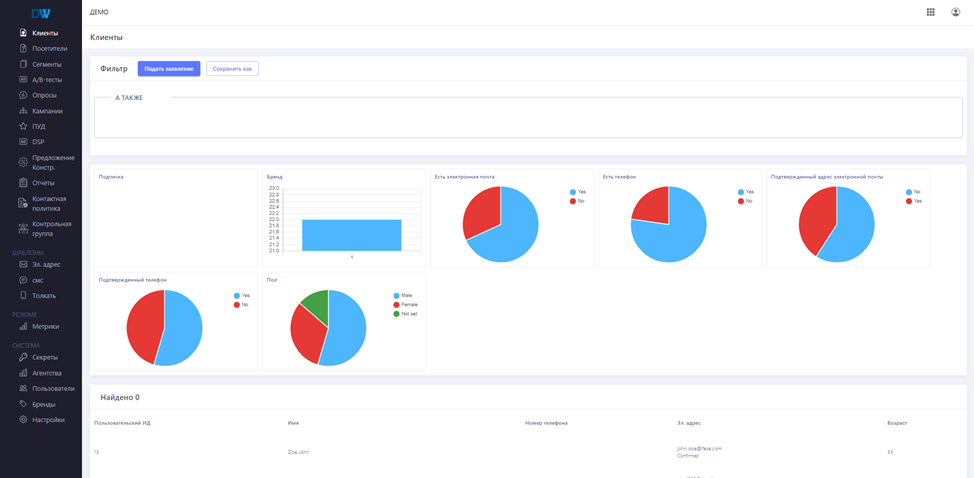
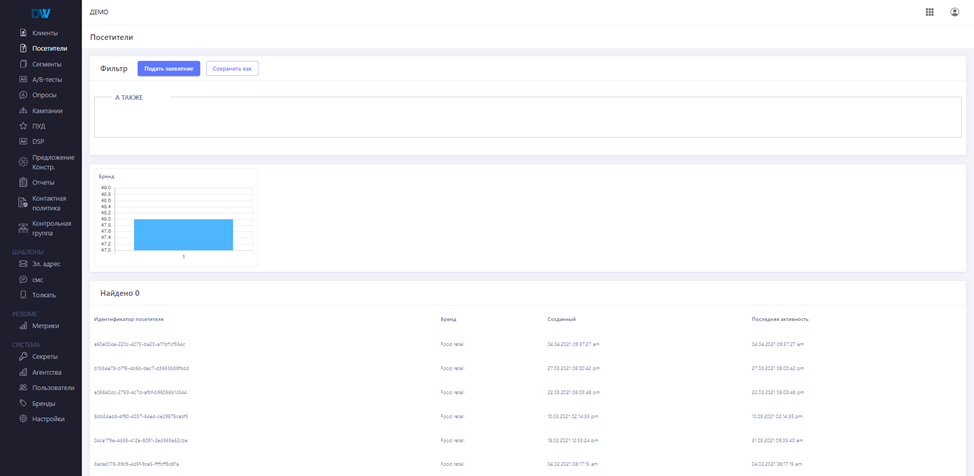
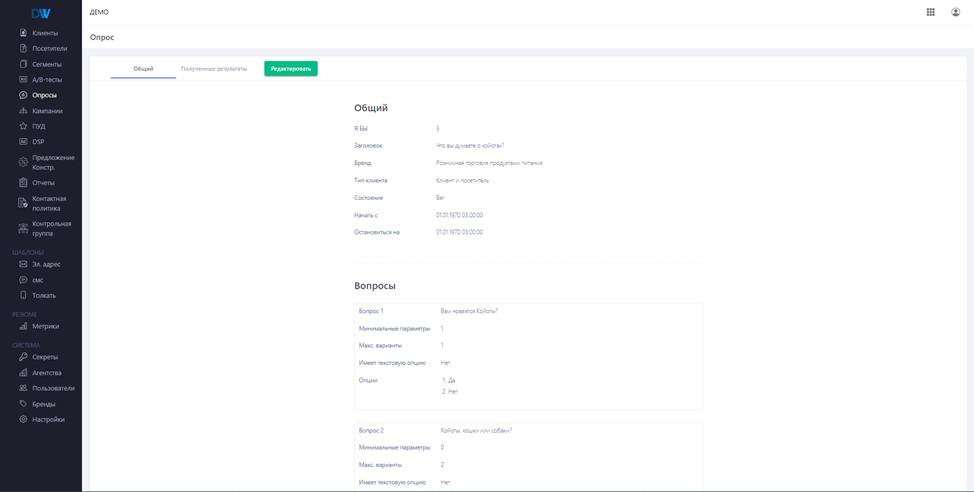
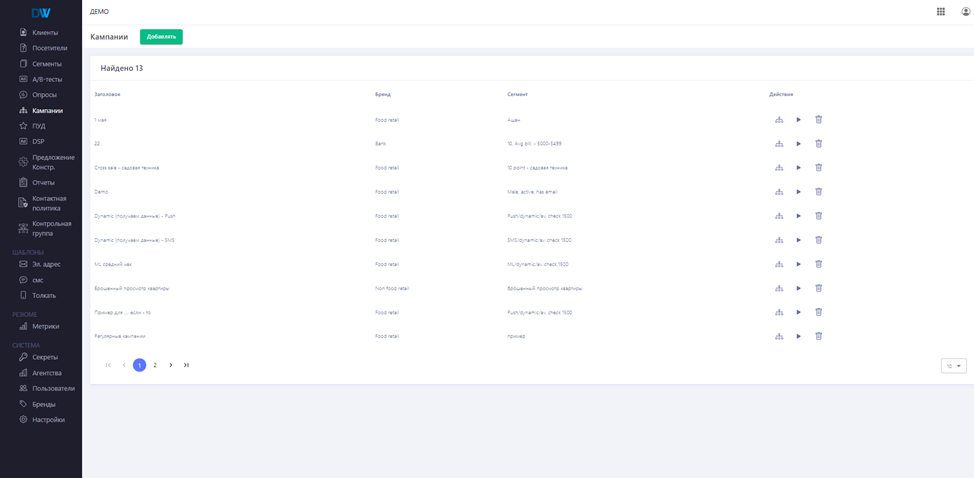
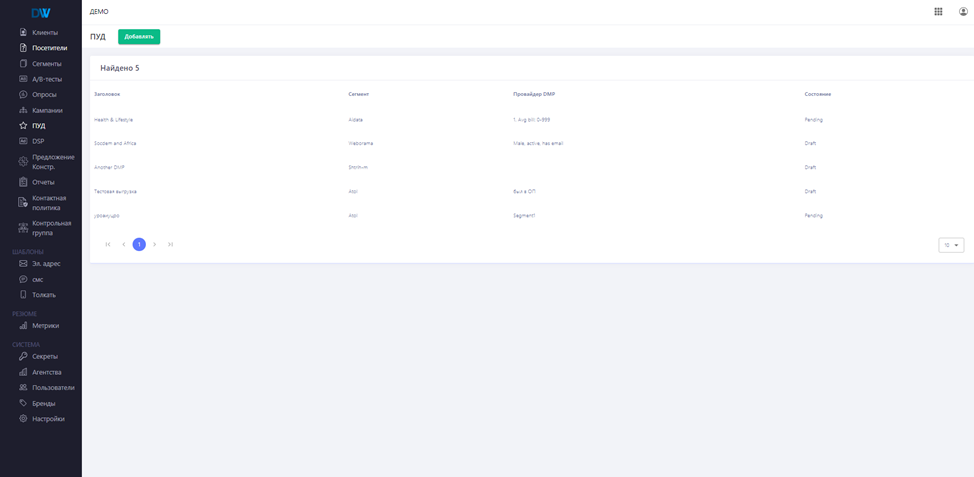
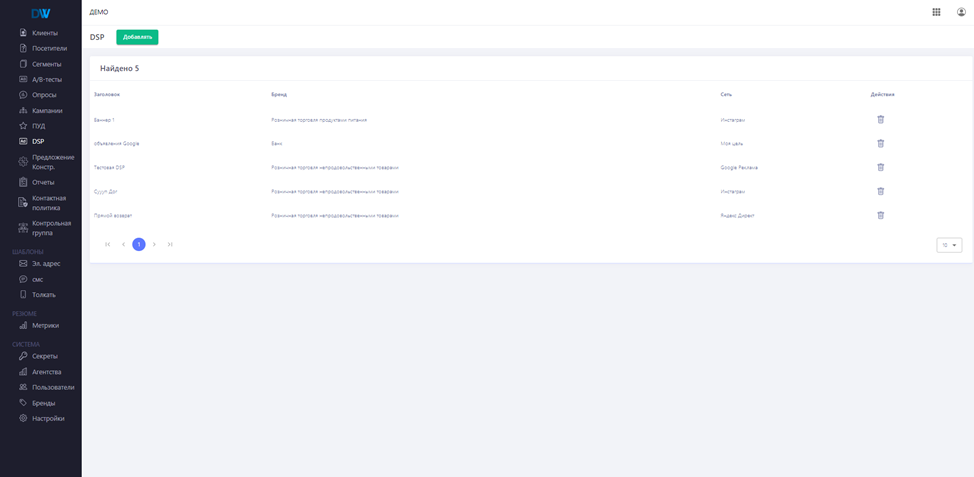
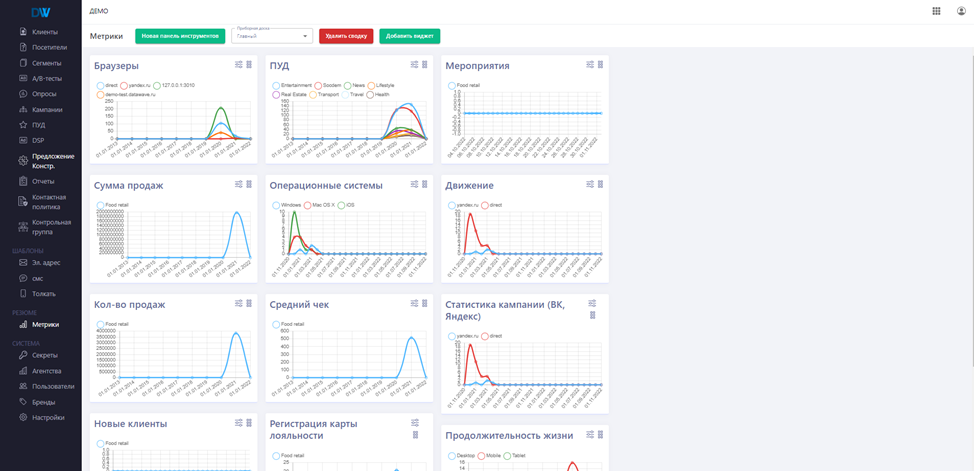
Datawave is a high-tech tool for boosting sales and service efficiency. The platform aggregates and analyzes various types of customer data from multiple sources, which the system then uses to build a single customer profile.
Datawave is listed in the Russian Software Registry under registry entry No. 16068 dated December 23, 2022. The entry was made pursuant to the instruction of the Ministry of Digital Development, Communications and Mass Media of the Russian Federation dated December 23, 2022, based on the minutes of the expert council meeting dated December 19, 2022, No. 2088pr.
Datawave is listed in the registry of IT companies under the decision on granting state accreditation to an organization operating in the field of information technology, dated February 1, 2024, No. AO-20240131-16393862932-3
Data ingestion. CDPs extract customer data from multiple sources (for example, transactional systems, online behavior, call center, demographic data or POS).
Identity management. CDPs resolve customer identities across multiple channels, most of them using deterministic matching and profile stitching with identifiers provided in the incoming data. A CDP creates and maintains a persistent customer identifier.
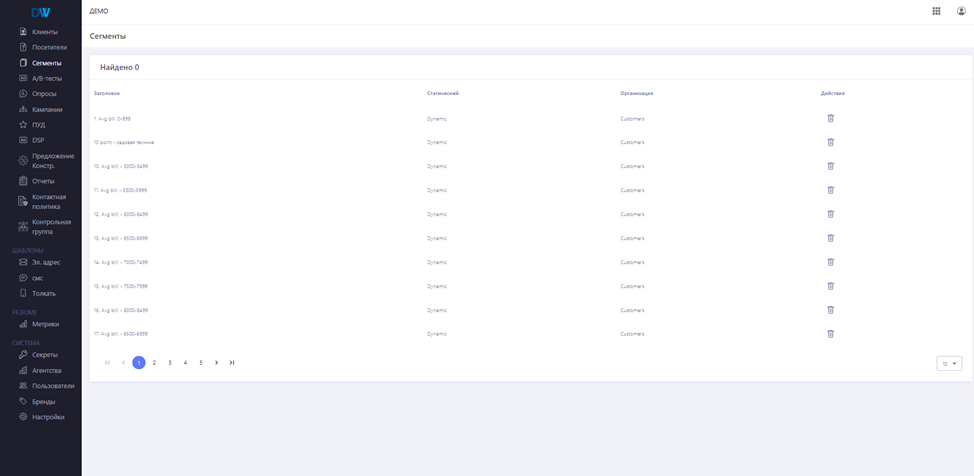
Segmentation. CDPs enable marketers to create and maintain universal omnichannel audience segmentation using unified data in the CDP.
Data delivery / activation. CDPs facilitate the activation of information and of the single customer profile created in the CDP by providing connectors and APIs for other marketing technologies.
Since the principles of how customer data technologies work are by now well established in the market, we have identified the system principles that matter to the client:
•Technology popularity: demand among other companies
•Technology prevalence: the number of professionals on the labor market skilled in using it
•Language development and support: long-term support.
The project is built on a microservice architecture, which was chosen to enable continuous improvement of the system's modules:
•Security and ease of testing
•Ability to improve the system without changing its core structure
•Ability to use various technologies: flexibility of support.
The following technologies and programming languages are used to implement the Software/Services:
ClickHouse: a system for building analytics. ClickHouse responds very quickly to analytical queries on data updated in real time, so it can be used in interactive applications. The system can scale to tens of trillions of records and petabytes of data. Using ClickHouse opens up possibilities that were previously hard even to imagine: it is possible to store the entire data stream without pre-aggregation and quickly get reports broken down by any dimension.
PostgreSQL: a powerful open-source object-relational database system with more than 35 years of active development that has earned a strong reputation for reliability, feature robustness and performance.
Redis: a server-side data structure store. It is used as a cache in front of the “real” PostgreSQL database. A Redis-based cache helps improve performance. It makes efficient use of the speed of in-memory data access and eases the data-processing load on the application's central database.
MongoDB: in MongoDB, data is stored in unstructured form, as special documents. It is used for working with non-relational databases.
React: a system for simplifying the process of building large applications. React is geared toward a component-based approach to development. React addresses application performance, making the application faster and less resource-intensive through the use of a virtual DOM.
Python: used for back-end development. It is in high demand among company employees and is a popular language among the target audience, as well as among analysts in companies' R&D departments
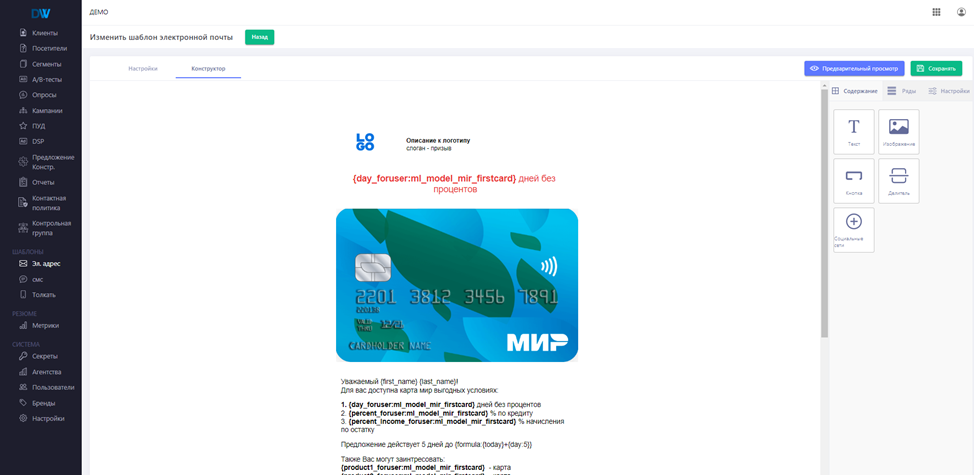
A visual builder for executing tasks according to an algorithm predefined by the user, taking into account trigger events generated by users or the system
Features:
A visual builder for creating triggered mailing campaigns